OpenAI and Cisco Collaboration
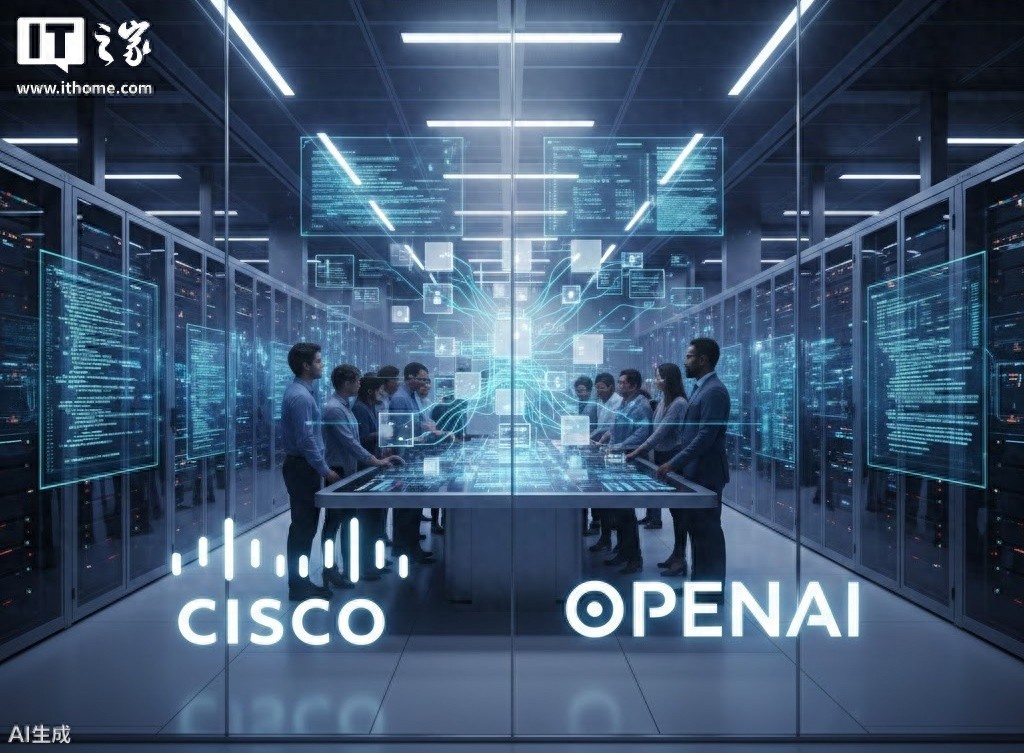
On January 20, 2026, OpenAI announced a deep collaboration with Cisco, a major networking giant. Through the large-scale deployment of Codex, an AI model developed by OpenAI that understands natural language and generates new code while fixing old code vulnerabilities, Cisco has transformed AI-native development into a core component of its enterprise software construction.
As generative AI moves from experimental stages to practical operations, Cisco has decided to leverage its expertise to apply this advanced technology in rigorous real-world environments.
Cisco and OpenAI have closely collaborated around Codex to define the practical shape of enterprise-level AI software engineering. Rather than viewing Codex as a standalone development tool, Cisco has directly integrated it into production engineering workflows, allowing it to interface with large-scale multi-repository systems, primarily C/C++ codebases, while meeting global enterprises’ security, compliance, and governance requirements. In this process, Cisco has helped shape Codex into an AI engineering partner capable of operating at enterprise scale.
Ching Ho, a member of Cisco’s engineering leadership team, stated that integrating Codex into Cisco’s enterprise software lifecycle workflow is highly valuable. The core appeal of Codex lies not in simple code completion but in its agency capabilities.
According to OpenAI’s announcement, Codex has demonstrated the following capabilities in practical tests:
- Connects multiple large codebases for understanding and reasoning.
- Proficient in handling complex programming languages.
- Executes an autonomous “compile-test-fix” loop based on command-line interface (CLI), taking over existing production environment workflows.
- Operates within existing audit, security, and governance frameworks.
Cisco engineers have optimized Codex’s performance in key areas such as workflow orchestration, security control, and support for long-term engineering tasks by providing feedback to OpenAI. After embedding Codex into daily engineering work, the Cisco team has applied it to several complex tasks:
- Cross-repository Build Optimization: Codex analyzed build logs and dependency graphs from over 15 interconnected codebases, identifying inefficiencies. This initiative reduced build time by approximately 20%, saving over 1,500 engineering hours globally each month.
- Large-scale Defect Fixing (CodeWatch): Utilizing Codex-CLI, Cisco automated defect fixing in large C/C++ codebases. Tasks that previously took weeks of manual work can now be completed in just hours, increasing defect handling throughput by 10 to 15 times.
- Framework Migration in Days: When the Splunk team needed to migrate multiple user interfaces (UIs) from React 18 to React 19, Codex autonomously handled most repetitive changes, compressing a workload that would have taken weeks into just a few days.
Ryan Brady, Chief Engineer of the Splunk division at Cisco, noted that the team views Codex as a core member of their internal team, yielding significant benefits. The team uses Codex to generate and follow development documentation, facilitating the audit team’s understanding of the logic behind code generation.
Through real feedback in production environments, Cisco has enhanced Codex’s maturity in compliance, long-term task management, and integration with existing development pipelines. Brad Murphy, Vice President of the Splunk engineering team at Cisco, stated that Codex has become an essential part of Cisco’s future AI-assisted development and operations.
In the coming months, Cisco and OpenAI will continue to collaborate to advance enterprise-scale AI native engineering tasks.
Comments
Discussion is powered by Giscus (GitHub Discussions). Add
repo,repoID,category, andcategoryIDunder[params.comments.giscus]inhugo.tomlusing the values from the Giscus setup tool.